
- Your cart is empty
- Continue Shopping


Precision DC Power Meter – Watt Meter and Power Analyzer with Powerpole Connectors
Precision DC Power Meter – Watt Meter and Power Analyzer with Powerpole Connectors
$39.99
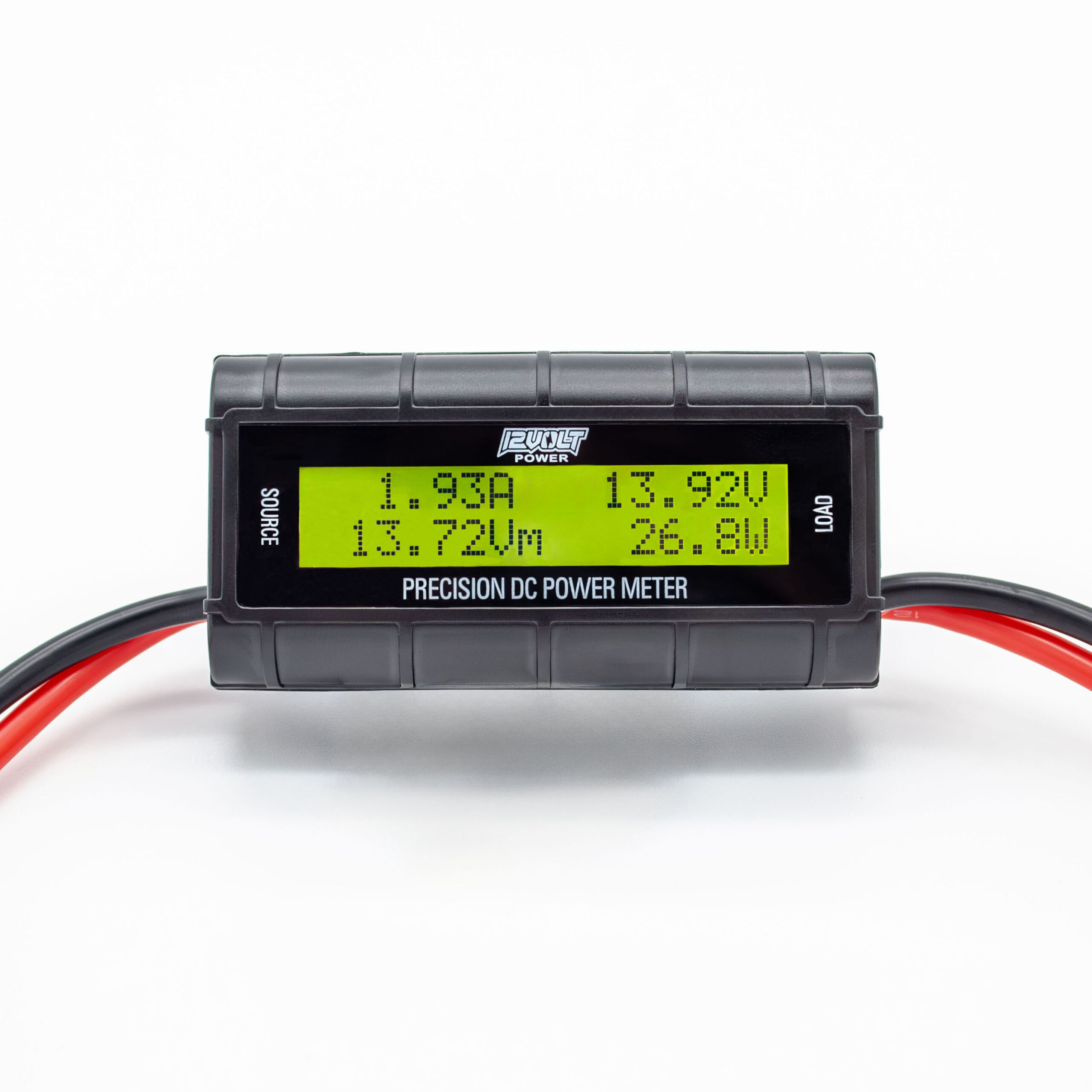
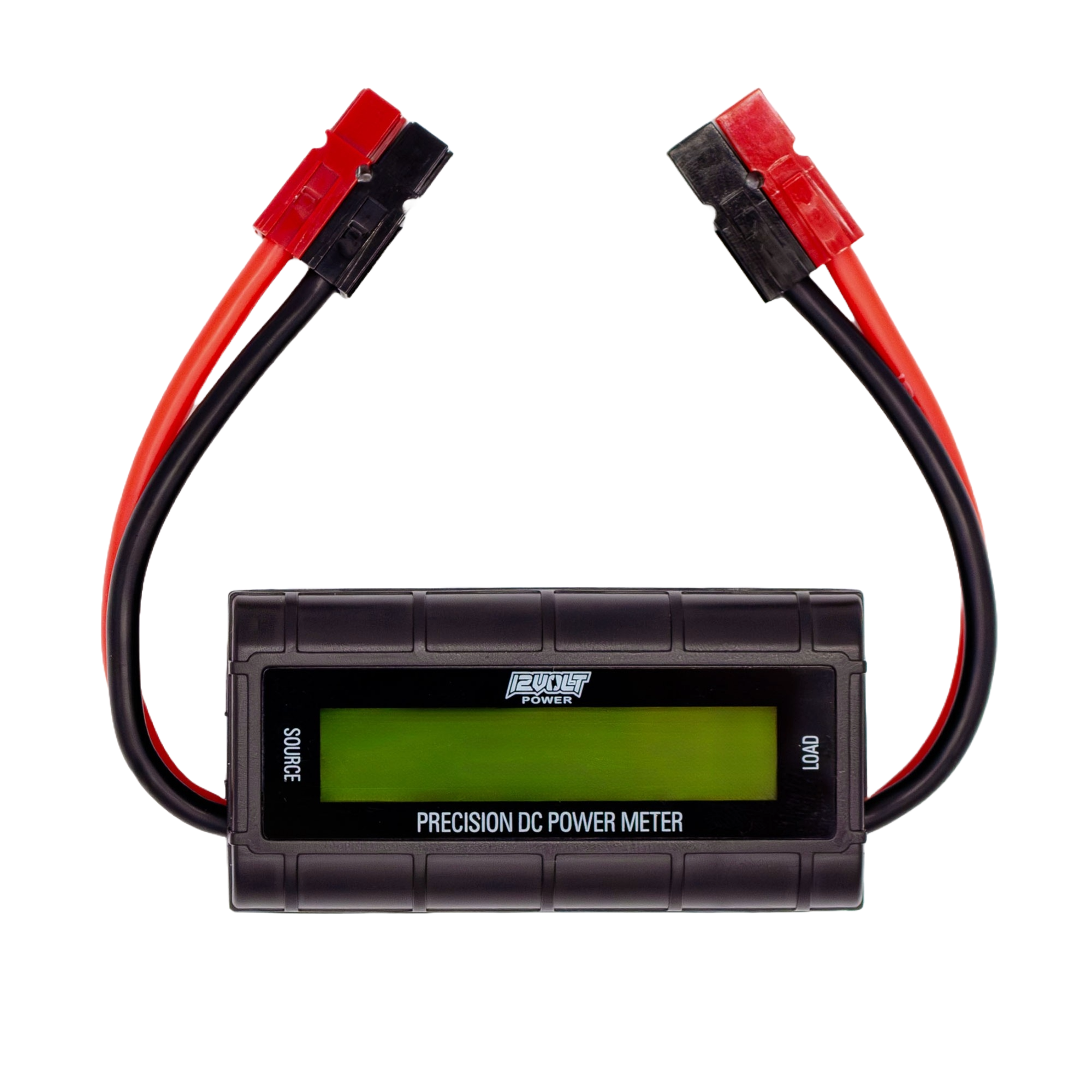
Easy plug-and-play design with 12-gauge Powerpole leads and a bright green backlit LCD. Measures 8 parameters including volts, amps, watts, amp-hours, watt-hours, peak amps, voltage sag, and peak watts. No setup required—works automatically for accurate DC monitoring. Rated for up to 60V/100A.

This easy-to-use DC power analyzer is designed to monitor the eight critical electrical parameters for system safety and performance: Amps, Volts, Watts, Amp-hours, Watt-hours, Peak Amps, Minimum Voltage (Sag), and Peak Watts. With a measuring capacity of up to 60V and 100A, a high-contrast green backlit LCD, and automatic reset at startup, this watt meter is an essential tool for anyone working with batteries, solar panels, chargers, or DC power systems.
Installation Setup & Wiring
- Red source wire (+): Connect to positive battery/source terminal
- Black source wire (–): Connect to negative battery/source terminal
- Output leads: Connect to the DC load
- Unit comes with Anderson Powerpole connectors pre-installed
Watt Meter Display
Startup Screen: Each time power is applied (or auxiliary input is used), the meter resets Amp-hours, Watt-hours, Peak Amps, Minimum Volts, and Peak Watts to zero.
Real-Time Parameters:
- Amps (A): Average current draw
- Peak Amps (Ap): Maximum current since startup
- Volts (V): Average system voltage
- Minimum Volts (Vm): Lowest voltage (sag) since startup
- Watts (W): Average power (Amps × Volts)
- Peak Watts (Wp): Maximum power draw since startup
- Amp-hours (Ah): Total charge delivered
- Watt-hours (Wh): Total energy delivered
Values are shown on the green LCD screen, with key data displayed continuously and others cycling every second.
Auxiliary Power Connector (Optional)
- Allows accurate measurement down to 0V by powering the meter externally
- Improves accuracy since the meter does not consume power from the source/load circuit
- Uses only 2 of the 3 included wires (see housing for (+) and (–) markings)
Typical Applications & Connection Examples
- Load Testing: Connect between a DC source (battery, solar panel, or power supply 5–60V) and any DC load.
- Low Voltage (<5V) Testing: Use the auxiliary connector for precise measurements below 5V.
- Battery Charging: Place the battery on the load side when measuring charging current and capacity from a charger.
WARNING
High-power electrical systems can be dangerous. Always take proper precautions when working with batteries, chargers, or power supplies.
- Do not exceed rated specifications (60V / 100A)
- Avoid short circuits — risk of fire, explosion, or personal injury
- Ensure proper wire sizing for high current loads
- Misuse, overloading, or shorting the meter will cause damage and void the warranty
| Voltage Range | 5-60V DC (0-60V DC w/ optional aux power) |
|---|---|
| Current Rating | 100A Max |
| Wire Gauge Size | 12AWG |
| Display Color | Green |
1 review for Precision DC Power Meter – Watt Meter and Power Analyzer with Powerpole Connectors
Only logged in customers who have purchased this product may leave a review.


James –
The Precision DC Power Meter exceeded my expectations with its accuracy and ease of use. It provides clear and reliable measurements of voltage, current, power, and energy, perfect for my solar setup and RC vehicles. The Powerpole connectors made installation quick and secure. Its bright LCD display is easy to read even in bright sunlight, and the durable build assures long-term reliability. Highly recommended for anyone needing precise DC power monitoring!